Vision - Metro North-West
‘Metro North-West’ is an exciting new rail concept for counties Derry/Londonderry, Tyrone and Donegal. It seeks to address the problem that current rail transport across the island is primarily designed around the needs of Belfast and Dublin – with little recognition of the localised transport needs that exist WITHIN key regions like the North-West.
The ‘Metro North-West’ (MNW) concept therefore creates a transport system that will ensure a better-connected North West of the island, and which reflects the everyday travel needs of people living, working, studying and visiting the region.
What’s the Idea?
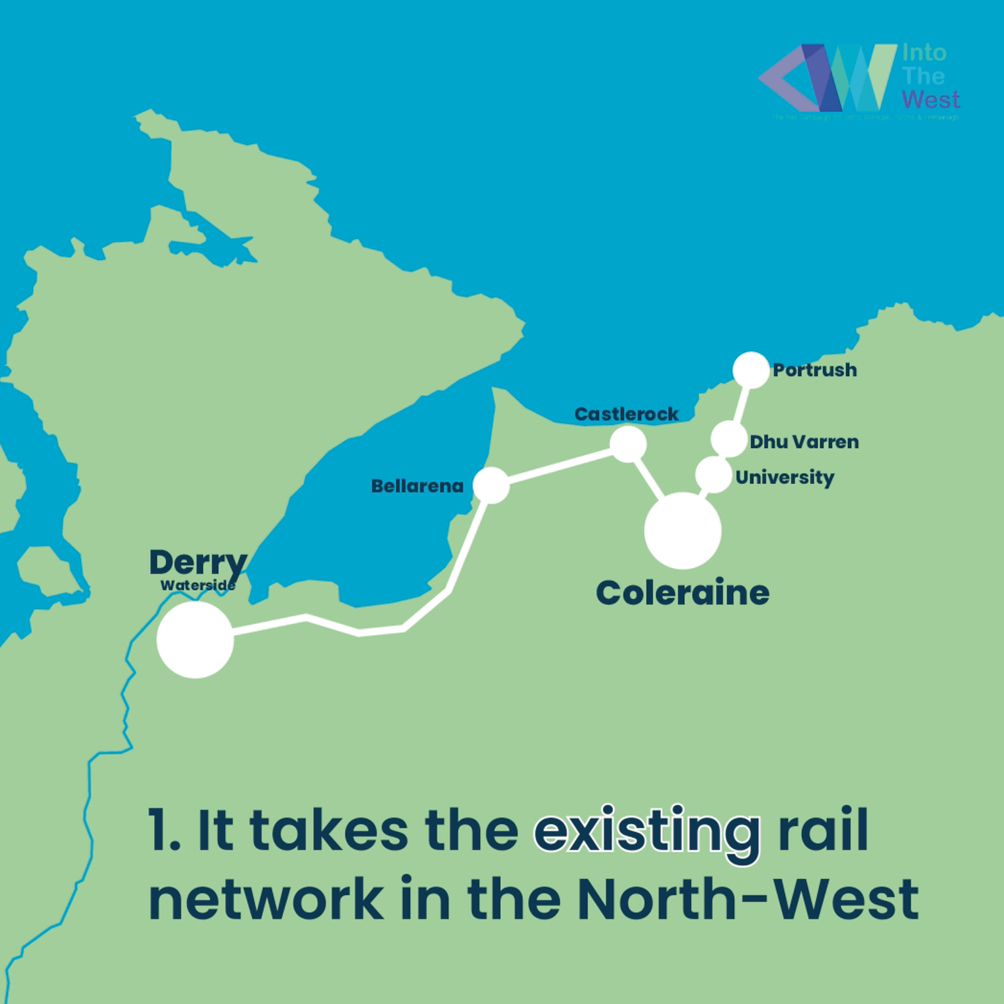
Metro North-West takes as its starting point the EXISTING rail network between Derry, Coleraine and Portrush.
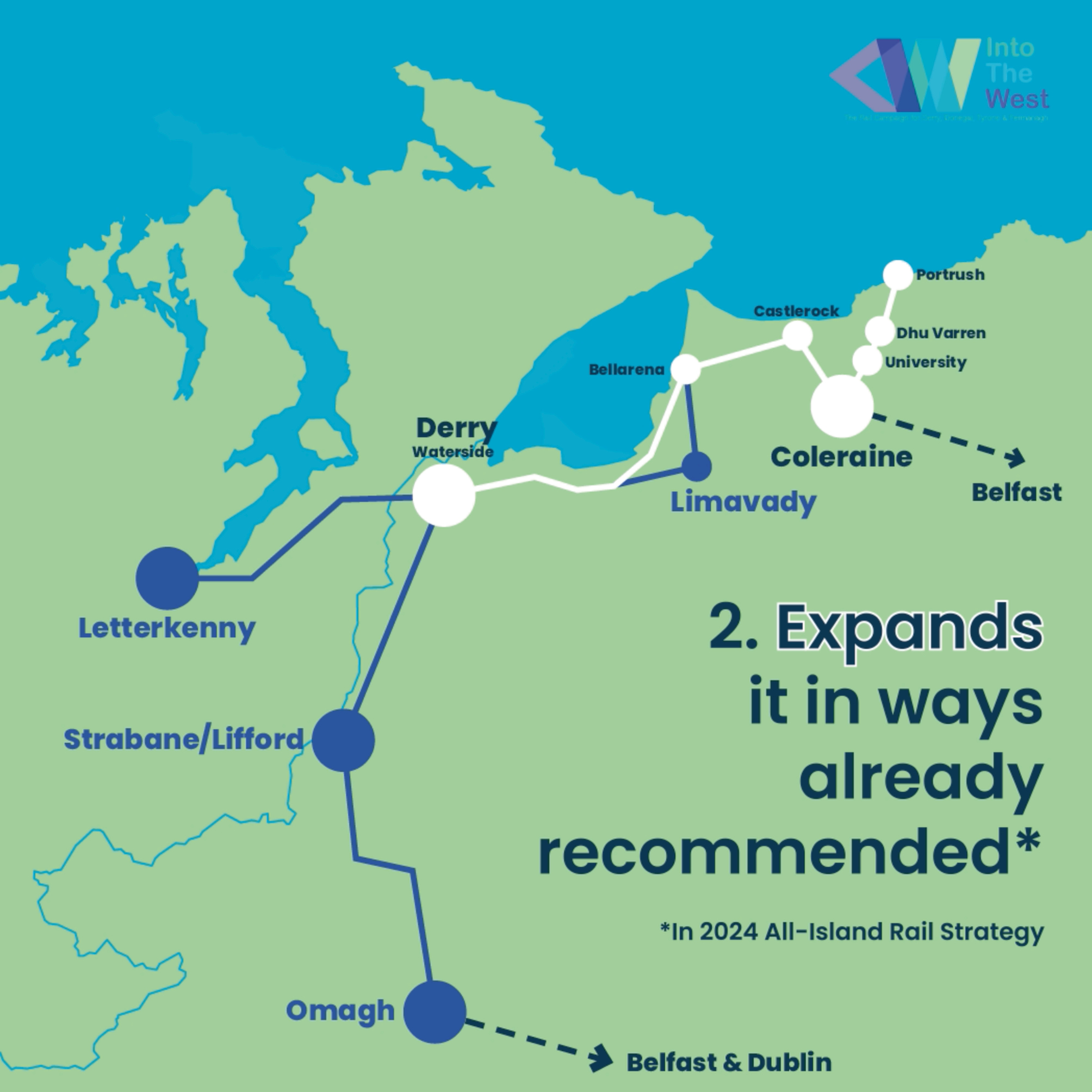
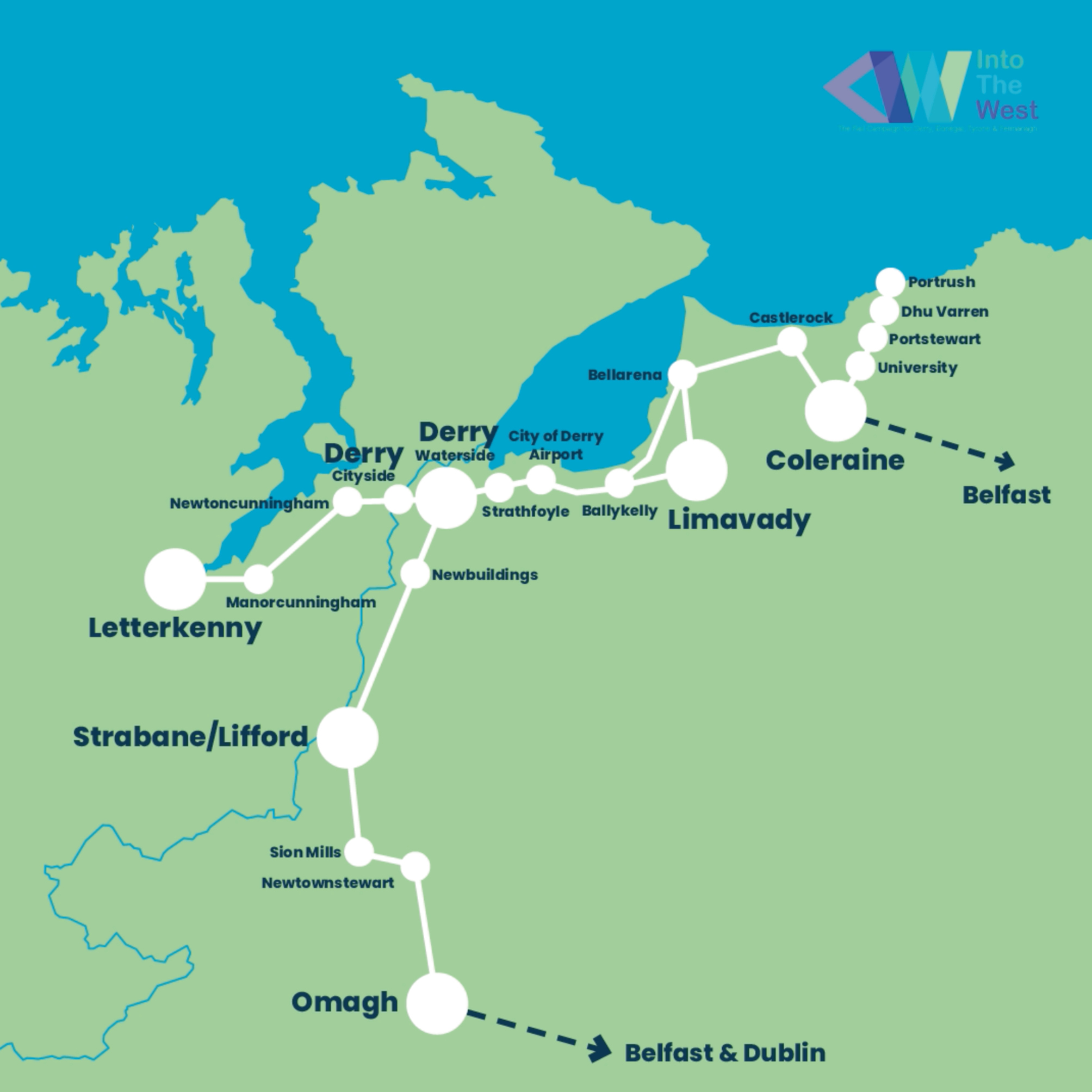
It then EXPANDS that network in ways that are recommended in the All-Ireland Rail Strategy and are already being progressed by government (i.e. re-opening routes to Strabane, Omagh, Letterkenny and Limavady).
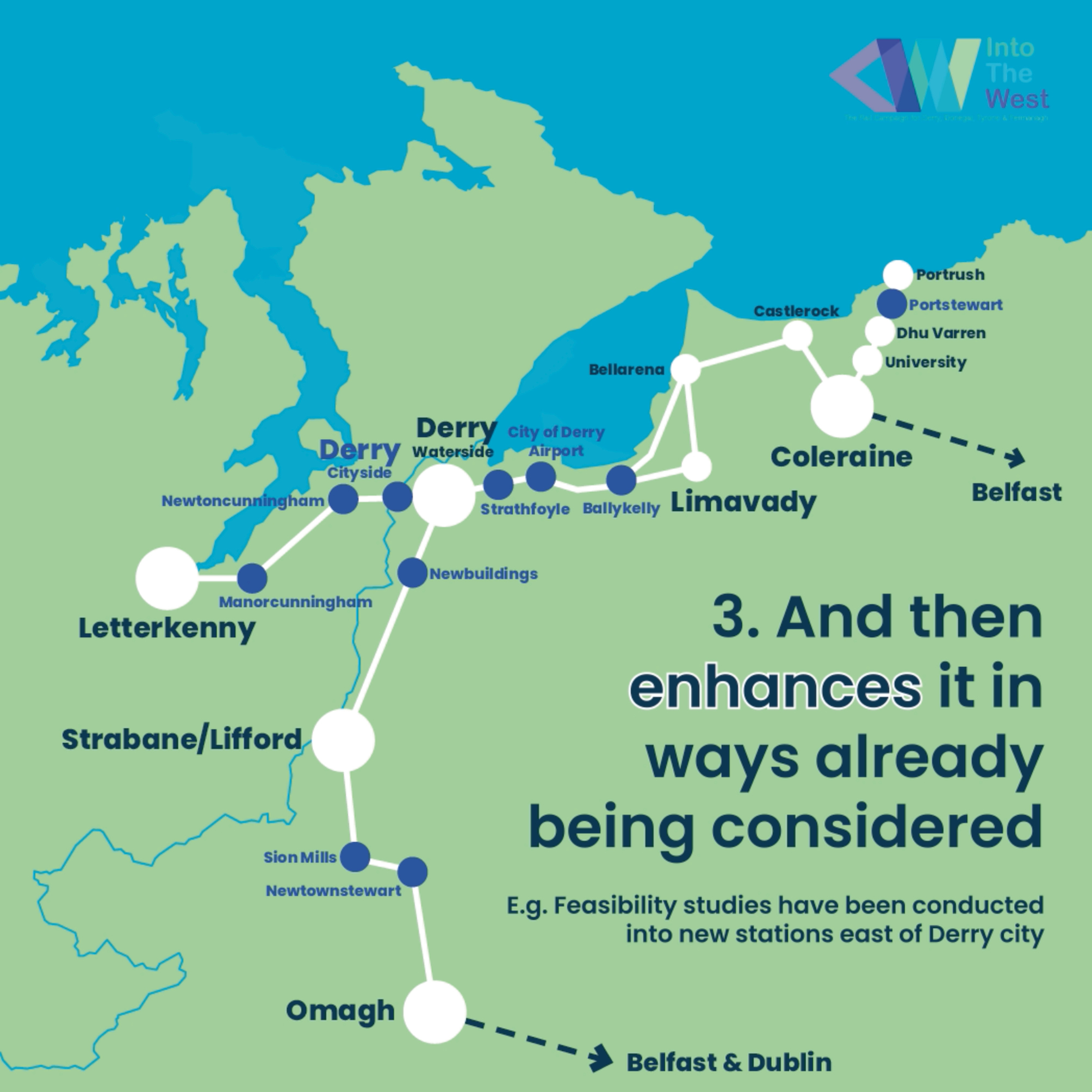
And it ENHANCES that core network through the addition of a number of new stations – some of which are already under consideration (e.g. Strathfoyle, Ballykelly, City of Derry Airport) and others which are new proposals (e.g. Portstewart, Newbuildings and Sion Mills).
That structure is then branded as a coherent, regional sub-network which operates within and alongside the wider rail system across NI/the island – whilst also having its own distinct identity & role (similar to how MerseyRail functions in England, for example).
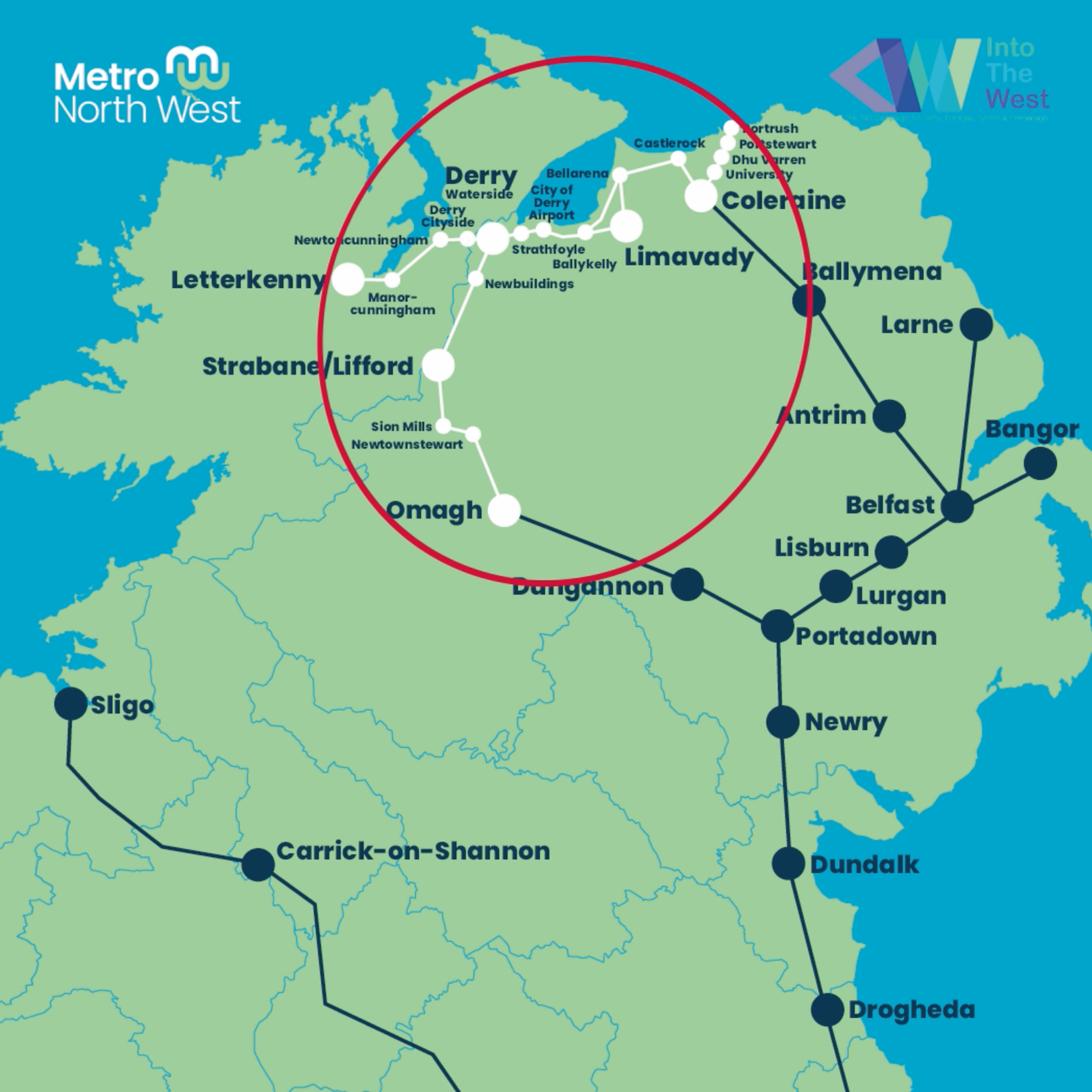
In this way a new regional transport ‘brand’ is created – operating from Letterkenny in the west to Coleraine/Portrush in the east and Omagh in the south, with all services converging in and travelling via Derry city. This is the ‘Metro North-West’ network area and concept.
How Would It Work?
Metro NorthWest would be designed to provide a greatly enhanced passenger experience compared to existing rail services:
- 1Trains every 30mins, 7 days a week, from 7am to at least 11pm.
- 2A ‘Pay As You Go’ system, with Tap in, Tap out payments enabled.
- 3Ticketing & timetables integrated with local bus networks throughout the network area.
- 4Improved on-board cycle space.
- 5Fully electrified routes/trains, for quicker, cleaner & quieter journeys (delivered over time).
Case Studies – Similar ‘Metros’ in England/Wales
The MNW concept takes its inspiration from similar Metro networks developed in recent years in Wales and Cornwall – for areas with similar or smaller populations than the North-West of Ireland. These networks take existing rail services, improve them in obvious ways, and then re-brand them into coherent new regional sub-networks – often without requiring major funding to get started. They continue to operate within and alongside their wider rail networks, but also have their own distinct regionalised identity and branding.
The Welsh government has recently introduced three such networks within the wider Transport for Wales area:
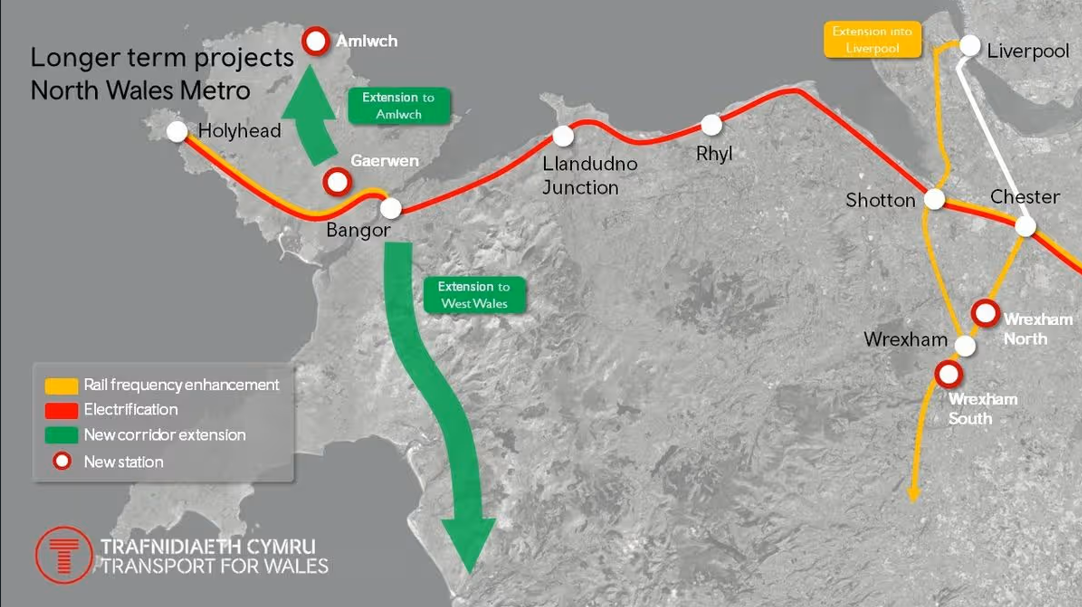
A) North Wales Metro
Connecting Wrexham, Bangor and Holyhead.

B) South Wales Metro
Linking Cardiff, Newport and the Welsh Valleys.
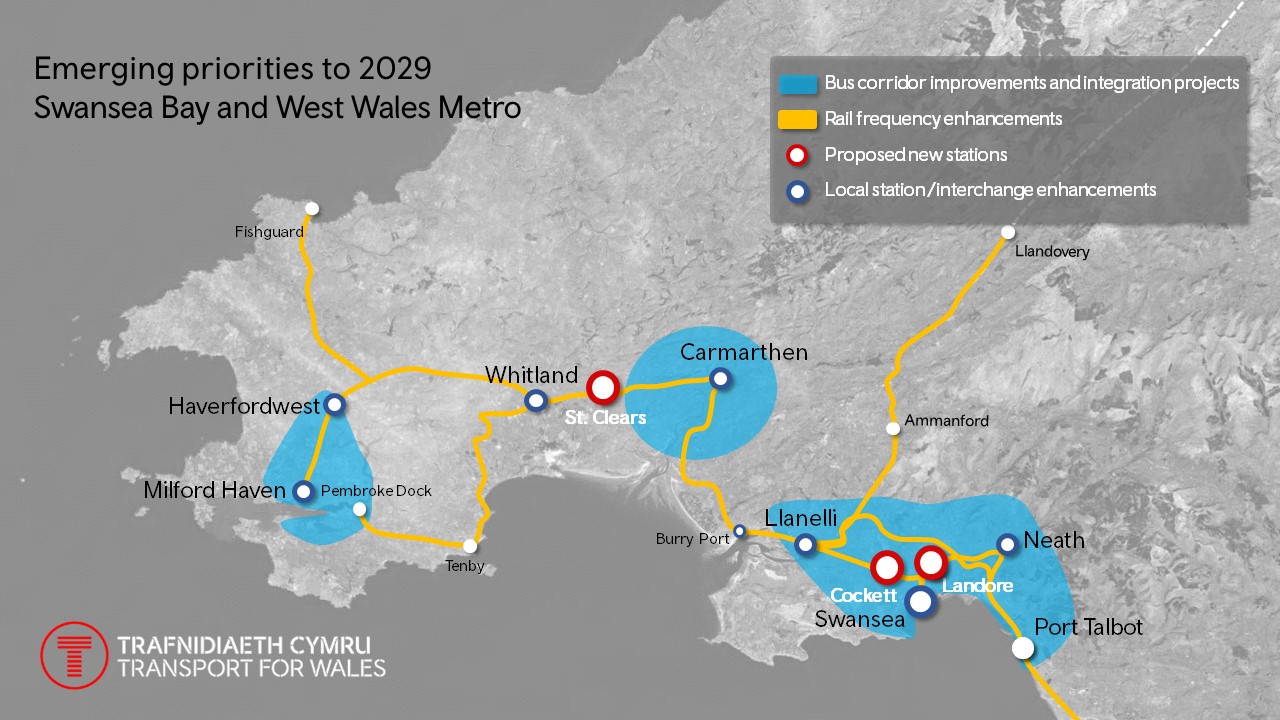
C) Swansea Bay & West Wales Metro
Connecting Swansea, Carmarthen and Milford Haven.
Mid-Cornwall Metro
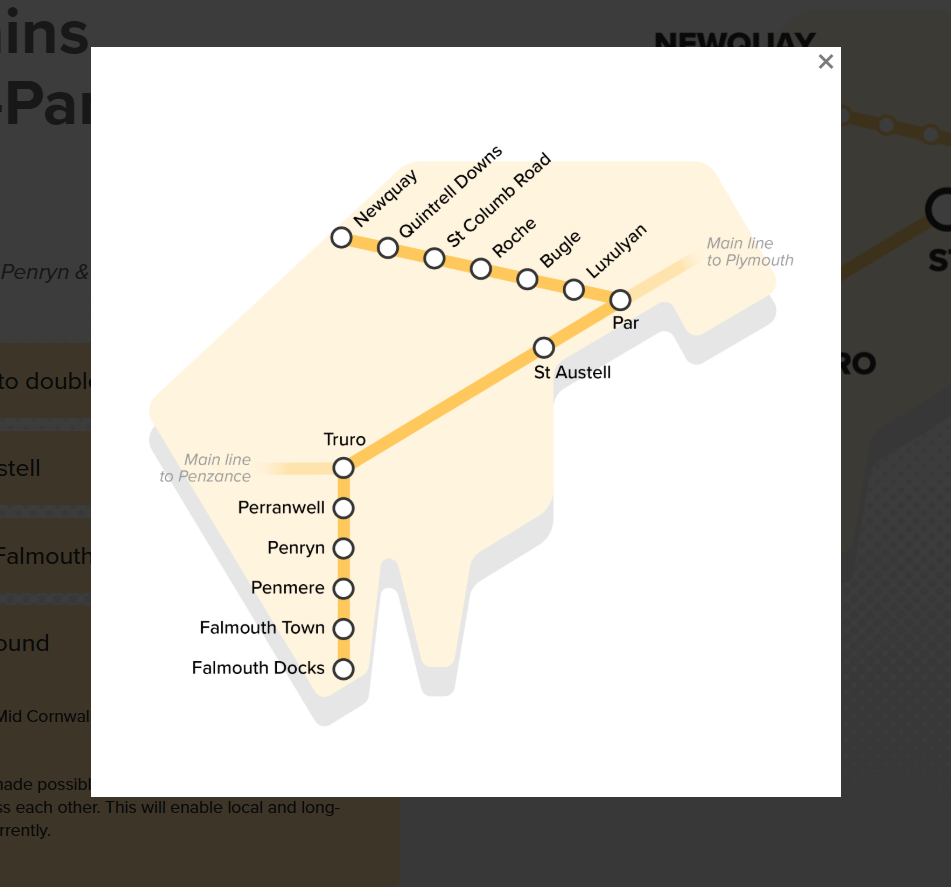
Meanwhile in England a ‘Mid-Cornwall Metro’ has been established using the same principle – taking existing services, improving them in sensible ways, and branding and promoting them as a single regional network within the wider rail system.
Are Those Places Comparable to North-West Ireland?
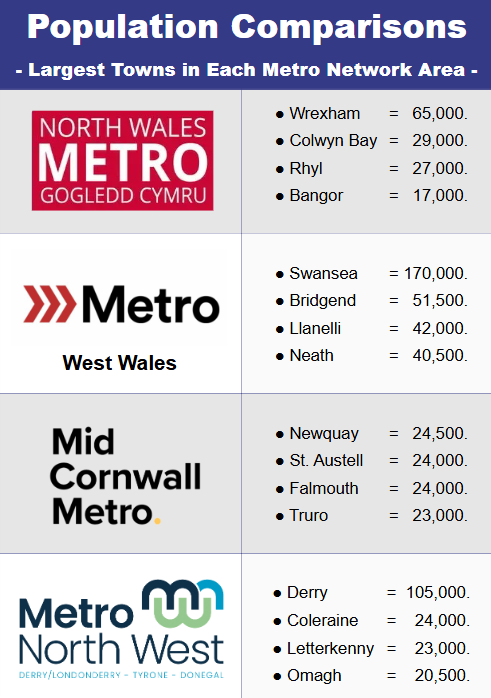
The 3 networks highlighted above serve regions with populations that are similar to or smaller than the population of the MNW area.
The largest town served by the new Mid-Cornwall Metro is Newquay. Its population of 24,500 is almost identical to that of Coleraine or Letterkenny. And the largest population centre covered by the North Wales Metro is the Wrexham Borough Council area – which with 135,000 residents is smaller than the Derry-Strabane council district. Wrexham city itself has only 65,000 people, which makes it much smaller than Derry city.
How Much Will It Cost?
Big infrastructure – whether road, rail or airports – costs big money. There is just no way around that. The good news, however, is that the Metro North-West concept revolves around infrastructure improvements which are already planned to happen – such as restoring rail to Omagh, Strabane, Letterkenny and Limavady. The only additional costs involved in the concept are therefore branding, frequency and new halts/stations – which won’t require huge additional sums of funding:
1) Network Enhancement
- Some of the new halts/stations included in the MNW proposal are already being considered and studied by Translink/DFI e.g. feasibility studies have been conducted into Strathfoyle, Ballykelly and City of Derry Airport. So these may be delivered anyway.
- Some additional stations/halts proposed in the MNW concept would have rail passing through or close to them anyway as part of the agreed key rail routes for restoration e.g. Sion Mills and Newtownstewart on a reopened Derry-Portadown line, Manorcunningham on a restored Letterkenny line. So the addition of these new halts would be relatively inexpensive.
- Into The West continues to make the case for such new rail halts anyway, regardless of whether the Metro NorthWest proposal happens.
2) Network Frequency
- Under current proposals, parts of the Metro North-West network are planned to receive a 30min service frequency in future (e.g. the Derry-Coleraine section), whilst others will have services only once an hour (e.g. to Letterkenny). Metro North-West will equalise the frequency across the entire network – with services every 30mins from every station/halt.
- That will require the purchase of some additional rolling stock.
3) Network Branding
- The Metro NorthWest concept relies on the entire network having a unified and coherent regional brand – across both trains and buses.
- The cost of doing so across the entire network/region would not be insignificant, but it would be relatively small.
Timescale
The 2024 All-Island Rail Strategy agreed rail should return to Tyrone, Donegal and Limavady. And there is also recognition that having only one station for the Derry area is insufficient – with a 21 mile gap when trains leave Waterside Station before they stop again. The problem is that the projects in the north-west to address these have been made low priorities with very lengthy timescales. A Derry-Portadown route is not scheduled to reopen until 2045 at the earliest, with Letterkenny only happening after that.
This makes them the longest projects and the lowest priorities in the Rail Prioritisation Plan. Meanwhile there is currently no official timescale for other key projects like Limavady.
The Metro NorthWest concept therefore creates a reason to address the low priority and lengthy timescales that the authorities have placed upon rail improvements here. Our region cannot afford to wait another generation for its rail to be improved and extended. By linking every individual rail improvement here together as connected components of a holistic bigger picture, it will no longer be possible to treat them as isolated projects of low priority. Each instead becomes another core piece of the much larger Metro North-West jigsaw.